Friday, January 11, 2008

An Interview with Noah Harlan, Co-Producer of Tehilim


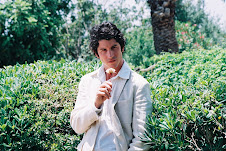
Above photo: A scene from Tehilim; Bottom photo: Liza Johnson (director, South of Ten) and Noah Harlan with his mom, Elizabeth, at the festival screening of Tehilim.

Selected for competition at the 2007 Cannes Film Festival, Raphaël Nadjari’s Tehilim depicts an ordinary Jerusalem family confronted with the father’s mysterious disappearance after a car accident. This perceptive and nuanced film explores how the family members deal with such a sudden and inexplicable loss.

Tehilim is the third film that Harlan has co-produced with Nadjari. In this interview, Harlan discusses Nadjari’s production process, his style as well as some of the themes that the film raises.


What about Raphaël’s style appeals to you?
I think what moves me about Raphy’s work is his resolute neutrality. To my mind, he defiantly rejects taking a position in terms of telling the audience how they should feel. As an audience, this is something that makes us very uncomfortable. But it would be wrong for anyone to hear a comment like this and assume that he hasn’t made decisions. In fact, he’s made incredibly specific decisions but he’s not going to tell you how to feel. You’re going to have to watch the film and engage with it.
A lot of audiences have been frustrated by the film’s ambiguity in explaining the father’s absence. I think what’s important when looking at Tehilim and responding to it is to understand that the film is not about answers. The film is about how each person in the film genuinely responds. In my opinion, the father’s disappearance is, in some ways, almost a totem event because the film is dealing with how one responds to loss, in any of its forms. So Raphy created a world, created this family and then removed one element. He then records how each of these characters respond to it.
I am really struck by the perceptiveness with which Tehilim deals with family dynamics. With the absence of the father, the authority figure disappears. To me at least, the film suggests that this disappearance creates the opportunity for a greater sense of interdependence among the mother and sons. The film is about loss in a number of different ways. The film can be an allegory for what happens when God leaves you. But more generally, it is also about what happens when an authority figure—in whatever form it takes—leaves and how one responds to it. What I think is interesting is that each member of the family—as well as each member of the extended community that we see in the film— has created, in their own mind, their own explanation for what happened and each one takes it in a different way. Some people take the vanishing as something very specific to them and other people treat it as an abstract event. And it obviously forces the son to confront who he is as an individual, not as defined by the rest of the family. And, without giving too much away, he goes through a very specific arc of swinging through an emotional understanding of self—in religious, social, cultural, sexual terms.
I love the opening where the father and son are sitting in on a very abstract torah study lecture. A bit later at the dinner table, when his mother asks her son what was discussed in torah study, we can clearly see that he didn’t really understand the lecture. But he wants to come across like he did so that he could be like his dad. What I love about that opening scene is that we get introduced to this very heady conversation that they are having in this Torah study. And when the son walks outside, the first thing he does is take off his yarmulke and stuffs it in his pocket so that he could go hang out with his friends. And I think this actually sets up one of the underlying tensions that runs through the film: The push-and-pull between the religious and secular influences within that family. And in between is a son who is trying to resolve a relationship with the two different halves—a mother and a father who have two different views of the world. And when that father is gone, the son struggles to keep the memory of the father alive but still be his own person—not a caricature of his father nor a caricature of his father’s beliefs.
Could you talk a bit about the title? “Tehilim” means “psalms”. Psalms is an interesting concept because psalms in Jewish life are things that are used at every moment of transition: at the end of the day, at the end of a life, at a birth. You really use them at moments of turning and at moments of decision and at moments of change. And when the father vanishes, that’s really what it is—it’s a moment of change.
Raphaël uses improvisation when working with his actors. Could you tell me how this process works? Generally speaking, with four of his five films, he has used improvisation. Only his first film, The Shade, had a full written dialogue script. Now, oftentimes when we hear that someone works in improv, there’s the assumption that it’s an amorphous process as if they go out and find the film. But the way Raphy works is that he writes a very specific script. He writes every scene, the intentions of every scene and the actions. Now Raphy is natively French and his family has a lot of influences from a lot of different places. He has also lived and worked in New York for seven years and now he’s lived and worked in Israel for four or five. So I think he felt that he could gain greater truth not by putting words into his actors’ mouths but by creating very accurate and precise situations for them with very specific intentions and allowing them to find the right words to say it. And that would also allow one to avoid idiomatic problems: You don’t have a concern about phrasing and using the wrong language because you are using people that are genuinely of a place. And Raphy mixes professional and non-professional actors. His leads are often professional actors but much of his supporting cast is made up of actual people that he meets and engages with.
With Raphaël’s work, there is such formal precision when it comes to the staging and the cinematography. How does he plan what the camera will do in relation to the improvisation of the actors? Are the shots storyboarded? We have a phenomenal cinematographer named Laurent Brunet.
Laurent has shot all five of Raphy’s films and they have a tremendous collaborative relationship. I think Laurent is brilliant because he has the ability to convey fragility and a raw sense, but with great formal rigor. They compose the shots. The entire film is storyboarded. Again, Raphy knows the whole film in his head. He knows what he wants and then he and Laurent work in the locations. But the film is shot in real locations—not soundstages—so the process is also about working within the confines of the actual environments that we find. But Raphy does have a very clear sense of a shot. So the filmmaking process, aside from the fact that you couldn’t find the lines written somewhere, is very similar to that of other films

Tehilim
does not use a handheld camera, but rather a suspended camera. This is a whole device that the director of photography wears. The film was shot in high definition and the cameras are very heavy so there is a belt and harness system with a pole that comes over the cinematographer’s head. The camera hangs from this. The director of photography is then able to hold the camera. This allows for gentle motion but not that jagged handheld look. That, in my opinion, is part of what provides the intimacy of his films. In Tehilim, it provides a lot of that intimacy because you feel as though you are looking through a particular set of eyes.

Thursday, January 10, 2008

A Wide Spectrum of Filmmakers and Artists Attend NYJFF Opening Night Reception

Stimuated by the opening night screening of the engrossing Israeli documentary A Hebrew Lesson, the filmmakers, artists and curators attending the evening's reception were in the mood to discuss their responses to the film as well as the projects on which they are currently working. William Phuan, program director of the Asian American International Film Festival, originally from Singapore, identified with the immigrants' struggle to adapt to a new country as depicted in the opening night film: He thought their stories will appeal to a broad global audience. Jean Tsien, film editor on Please Vote for Me and Shut Up and Sing, reflected on the pace of A Hebrew Lesson while comparing it to the cutting in most American films. Filmmaker Danae Elon (Another Road Home, NYJFF 2005) talked about one of her current projects, a romantic comedy about circumcision. Another filmmaker in attendance, Tanaz Eshaghian (Love Iranian-American Style, NYJFF 2006), just completed the online edit on her new film about transgender people in Iran.

Four of the filmmakers whose work is being shown in this year's festival: (from l to r) Jason Hutt, director of Orthodox Stance; Elinor Kowarsky, producer of A Hebrew Lesson; Mark Podwal, executive producer of House of Life; Noah Harlan, co-producer of Tehilim. (Photo: John Aquino)

Filmmaker Danae Elon (Another Road Home, NYJFF 2005)

(from l to r) Andrew Ingall, Assistant Curator for The Jewish Museum and NYJFF programmer; Stuart Hands, NYJFF blogger; and Abe Lebovic who appears in this year's Goyta. (Photo: John Aquino)

(from l to r) Rachel Chanoff, Independent Curator and NYJFF programmer; Aviva Weintraub, NYJFF Director and Associate Curator, The Jewish Museum; and Ilana Trachtman, director of this year's Praying with Lior.

The two Avivas: Aviva Weintrab and Aviva Kempner, director of The Life and Times of Hank Greenberg and the upcoming Yoo-hoo, Mrs. Goldberg.

(from l to r) Andrew Ingall; William Phuan, program director of Asian American International Film Festival; and Jean Tsien, film editor of Please Vote for Me and Shut Up and Sing.

Levi Okunov, fashion designer and participant in "Off the Wall," the Jewish Museum's open studio project.

Wednesday, January 9, 2008

After NYJFF's Opening Night Screening, Producer Elinor Kowarsky Discussed her Film, A Hebrew Lesson, and the Ethics of Documentary Filmmaking


(Above) Elinor Kowarsky and NYJFF Director and Associate Curator for The Jewish Museum, Aviva Weintraub (photo:John Aquino); (Below) A Scene from A Hebrew Lesson.

Last night, the festival opened with the recent Israeli documentary A Hebrew Lesson (2006). The film follows Chin, Dong Dong, Sasha and Marsiol, various newly arrived immigrants to Israel. Their lives intersect in a language immersion class, an intensive and intimate environment that tries to cushion the students’ difficult adaptation to the new foreign culture. Their various stories are seamlessly interwoven in this compassionate documentary that questions Israel’s self-image as it explores the diversity of its inhabitants.

After the screening producer Elinor Kowarky discussed the genesis and aims of the project:

"This film was made with two partners, David Ofek the director, and Ron Rotem the photographer. All three of us had worked together on another project called No. 17. We knew we wanted to work together again and were looking for an idea that would deal with the identity of Israeli society. The idea eventually came from Ron who went to a language school in Denmark. He came back and told us all about the different characters and people he met. He ran through their different stories. So we thought a language school would provide a very good framework to tell a story about Israeli society through the eyes of the new Israelis.

"We started out looking for the teacher. Our film is a documentary but there was a lot of casting involved because we knew we wanted a teacher who would be more than just a classroom teacher. We wanted her to be someone with her own story, someone who would be very much involved in the students’ lives and weave the different stories together. So we met over fifty language teachers until we found Yoela—we were also very touched by her personal story. And she was very much involved in the students’ lives and was like a mother to them.

"Before we started shooting, we met with all the different students that were enrolled in the language school at that time. And we chose our characters and put them all together in the same class with Yoela. That’s how we were able to really follow all the characters over six months.

"It was very important for us to try to have different voices and different faces. We didn’t want to go with the real standard Aliyah stories. We wanted to use the space, the space where you slowly get into the history, get to understand Israel through the language. At the beginning, you’re very much just a newcomer—you don’t know much but as long as you keep on learning the language, you get more and more involved, more and more opinionated … So this was, for us, a great framework to have a look at society."

Did you find it difficult to distance yourself from the subject matter or did you become emotionally involved, an audience member asked.

"The story that I was most involved with was Marisol, the girl who gets pregnant…I helped her along by just being with her throughout the stages and helping her. You don’t see a lot of her crisis in the film because we preferred to leave it out. There were a lot of difficult moments with her boyfriend and his family. We saw much of the other stories. But I think we tried to get the right balance between the film and her life so they would be happy and feel good when they are showing their story. We didn’t want to overexpose them. I’m very happy that she’s going to be married soon. She has a new boyfriend who also has a daughter. They are living in Peru and she is very happy. In making documentaries, we are always very much involved in our characters’ lives. It is not that once the film ends, we stop being in contact. It’s a constant relationship that we maintain. A film is a film and life is life and we try to keep a good balance…We try to make films about people we love. That’s the way we treat them."

Monday, January 7, 2008

Behind the Scenes: An Interview with NYJFF Director and Associate Curator for The Jewish Museum, Aviva Weintraub


How have you seen the festival evolve over the years?
It has really grown in many ways. This year we’re presenting thirty-two films over two and a half weeks. And by comparison, at the festival in 1992, we had eleven films over eight days. In terms of content, the biggest change is that it has grown from a very tightly focused thematic festival where the first few years focused on films from Eastern Europe and the former Soviet Union. And now it is a truly global international festival.
What filmmakers have you seen emerge and grow artistically over the course of the festival’s history? Our opening night film, A Hebrew Lesson, has a team of directors and producers. One of its directors, David Ofek, is someone whose work we’ve shown in the past. We showed a film of his called The Barbecue People that we loved—it was a narrative film. And it’s great to see him continuing with these deep explorations of human relationships. There is another filmmaker we have come back to several times: the Hungarian director Peter Forgacs. This year we’re showing his film Miss Universe 1929. And we’ve shown quite a few of his films over the years. The way he uses found footage and incorporates the narrative seems to get richer and richer.
What made the festival decide to do a tribute to director Axel Corti? We’ve shown some of his films individually over the years here at the museum. Most recently, we showed his film Young Doctor Freud. The response to that was so enthusiastic that it fed my own personal interest in his work—I thought that there might be a broad audience for it. And when I think about how under-recognized he is here, this seemed like a great opportunity to try and show several of his films.
Have there been any other retrospectives of his work? Not that I know of.
With so many strong films coming out of Israel, is it hard balancing the Israeli content with the rest? This year it was particularly hard because, I think, a lot of people have been reading in the press that the most recent films from Israel have been particularly strong. There were a lot of winners in the Cannes Film Festival and there’s quite a lot of buzz about Israeli film. This year we have a larger proportion of Israeli film than in any previous festival year. It’s actually a nice confluence with the fact that 2008 is the sixtieth anniversary of the State of Israel—so we’re going to start celebrating in January.